

Lady in the Dark
Mahagonny Songspiel
Johnny Johnson
Music with Solo Violin
Popular Adaptations, 1927-1950
Zaubernacht
Der Protagonist
Chamber Music
The Firebrand of Florence
Die Dreigroschenoper
Two fateful meetings in November 1939 between Kurt Weill and Moss Hart led inexorably to a new kind of Broadway musical, the brainchild of three Broadway legends (lyricist Ira Gershwin was the third) put on stage by an even more imposing roster of talent--the opening-night cast included Gertrude Lawrence, Danny Kaye, Victor Mature, Bert Lytell, Natalie Schaefer, and MacDonald Carey--from producer Sam Harris on down. The new show, entirely innovative both in form and subject matter, used psychoanalysis as the primary plot driver and staged the protagonist's spectacular dreams as one-act operas, giving audiences glimpses of the glamorous worlds of fashion and publishing as well as the intimacies of a psychiatrist's office. Lady in the Dark landed like a bombshell on Broadway in January 1941. Now, for the first time since then, producers and directors can recreate the magic from this new critical edition of the score, book, and lyrics. Through patient and thorough examination of a wealth of archival and other unpublished sources, the editors present a version of the show very close to what hit the boards in 1941.
The libretto (Random House) and vocal score (Chappell) were published at the time, but neither one hewed very closely to the stage script. (Hart's edition of the libretto made no effort to incorporate improvements introduced during rehearsals and tryouts.) Subsequent performing editions stuck with the published version, longer, slower, and less theatrically effective, and the stage script faded from memory, gradually drifted over by the sands of Broadway history. Editors bruce d. mcclung and Elmar Juchem have brought it back in an edition complete with cut numbers and musical alternatives, reconstructed both from interviews with the original participants and archival sources excavated from repositories in New York and elsewhere. The score presented problems of its own, as the editors had to glean alterations made during rehearsals and the Broadway run from confusing (in some cases, all but indecipherable) instrumental parts. The result: a shorter, tighter show that makes it plain how Lady in the Dark set Broadway on its ear.
We have come to expect extensive research and thoughtful evaluation of source material from the Kurt Weill Edition, as well as attention to detail and beautiful engraving and printing. The new volume delivers, with the score and dialogue (along with cut material and commentary) presented in a generous two-volume format, with a separate Critical Report containing source descriptions and a full record of editorial decisions. In these respects, this new edition is no different from those that have already appeared in the Kurt Weill Edition. But few volumes, in this series or any other, have done so much to reshape our understanding of a Broadway smash, or to give today's theaters incentive to revisit it.
bruce d. mcclung, Thomas James Kelly Professor of Music at the Cincinnati College-Conservatory of Music, is the world's foremost authority on Lady in the Dark, having published the definitive Lady in the Dark: Biography of a Musical (Oxford, 2007), winner of a Deems Taylor Award and the 2007 Kurt Weill Prize. Elmar Juchem is the Managing Editor of the Kurt Weill Edition and Associate Director for Publications and Research for the Kurt Weill Foundation.
Kurt Weill Edition (Series I, Volume 16): Lady in the Dark, ed. bruce d. mcclung and Elmar Juchem (New York: Kurt Weill Foundation for Music / European American Music Corporation, 2017). Complete Score in Two Volumes: 748 pp.; Critical Report: 137 pp. ISBN: 978-1-62721-901-3. Sales Price: $695 ($475 for subscribers). Order no. KWE 1016.
"This volume presents, for the first time in full score, a work whose significance in the oeuvre and artistic evolution of Kurt Weill can scarcely be overstated. This first collaboration between Weill and Bertolt Brecht would achieve epochal importance in the genre of opera (and music theater in general); it led Weill to form his signature 'Song style,' which would exercise a stylistically formative impact on the music of the Weimar Republic; it brought about a musical breakthrough for Weill's wife Lotte Lenya, whose performance inaugurated a new species of singer-actor; and it represents Brecht's debut as a stage director in the domain of musical theater." These lightly abridged opening sentences from editor Giselher Schubert's introduction to the new critical edition of the Songspiel pretty well sum up its importance, without even touching on the work's position as a "study" for one of the most popular operas of the twentieth century, Aufstieg und Fall der Stadt Mahagonny, or the essential role of designer Caspar Neher, whose contributions to set and costume design in Weimar theater rival those of Weill and Brecht to music and text.
All that may seem like a lot of weight to carry for a half-hour work that was dashed off in less than a month and for which a new genre, the "Songspiel," had to be invented. But Schubert's extensive research and meticulous editorial work leave no doubt that the piece did lead to dramatic changes in music and theater first in Germany and then the world. And it's all presented here: a thorough critical and historical essay, color facsimiles of significant source material, detailed notes on the editorial work and descriptions of manuscripts and other essential sources, and the score itself, complete, lovingly engraved and laid out on large, easy-to-read pages.
Mahagonny: Ein Songspiel (Series I, volume 3) represents the tenth volume to appear of the Kurt Weill Edition, a long-term project devoted to preparing new critical editions of Weill's works that are also suitable for performers. In fact, the score and instrumental and vocal parts of the Songspiel were tested for playability and accuracy in two separate stagings of the work before publication. The new materials are now available for use in all future productions of Mahagonny Songspiel.
Giselher Schubert, former director of the Hindemith-Institut in Frankfurt, has published extensively on Hindemith, Weill, Schoenberg, and the music of the Weimar Republic. He serves on the Editorial Board of the Kurt Weill Edition.
Kurt Weill Edition (Series I, Volume 3): Mahagonny Songspiel, ed. Giselher Schubert (New York: Kurt Weill Foundation for Music / European American Music Corporation, 2016). Main Volume: 182 pp.; Critical Report: 59 pp. ISBN: 978-1-62721-900-6. Sales Price: $340 ($250 for subscribers). Order no. KWE 1003.
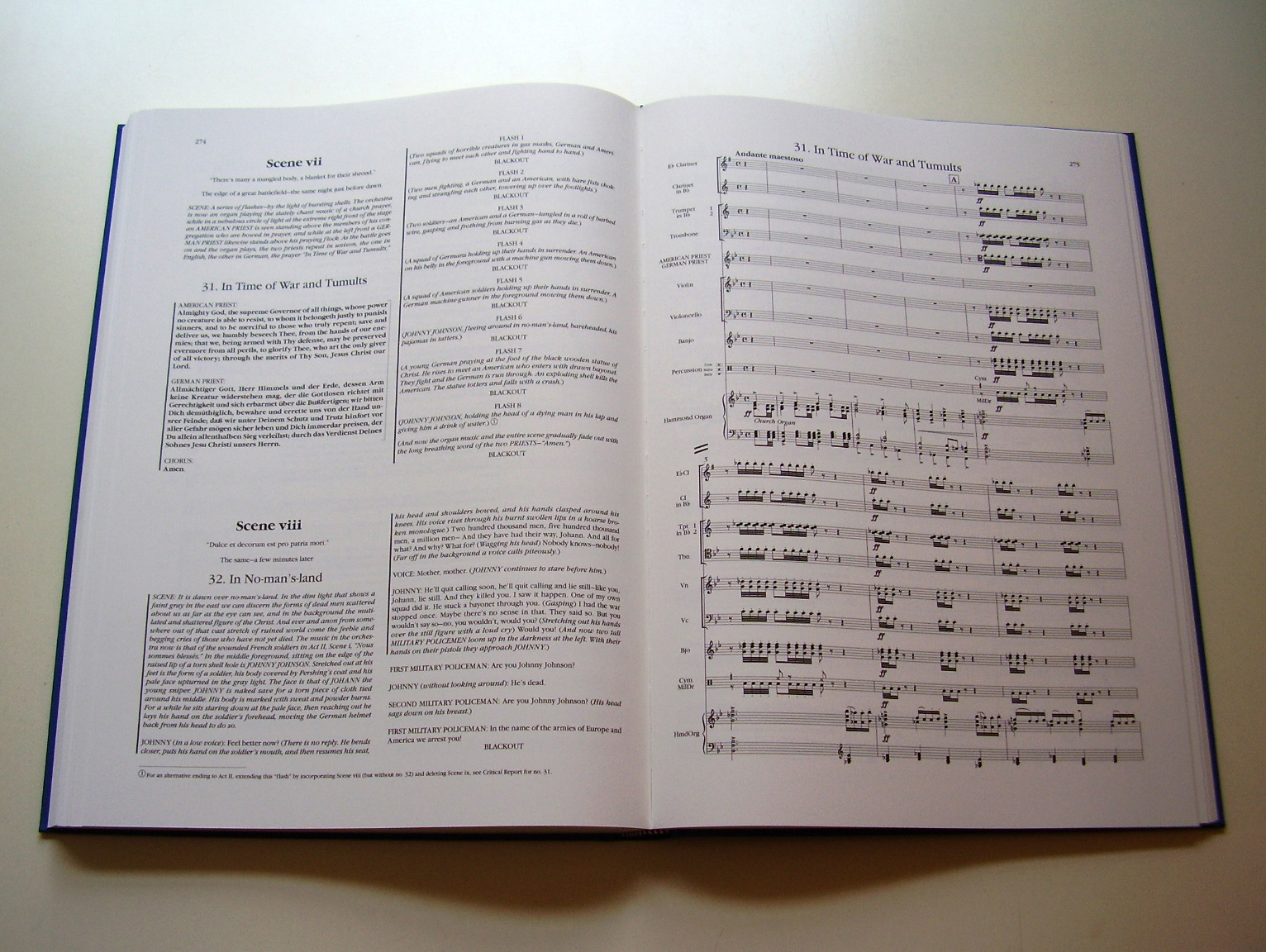
The Kurt Weill Edition has just released its latest volume, Johnny Johnson (Series I, Volume 13), edited by musicologist Tim Carter of the University of North Carolina at Chapel Hill. Originally produced by the legendary Group Theatre in 1936, Johnny Johnson marked Weill's first contribution to the American musical theater. With book and lyrics by Pulitzer Prize-winning playwright Paul Green, the anti-war musical opened in November 1936 on Broadway, where it enchanted audiences and critics alike. Lee Strasberg directed, and the cast included a young Elia Kazan. When the production closed in 1937, the Federal Theatre Project took up the work and mounted major productions in Boston and Los Angeles. Although Johnny Johnson enjoyed frequent performances by regional and amateur theaters--even a brief Broadway revival in 1971--the work's publication record left much to be desired. Less than a handful of songs were available as sheet music, and the only published vocal score was deeply flawed.
For the Kurt Weill Edition of Johnny Johnson, Carter drew on a vast array of surviving source materials, including not only Weill's manuscripts but also rehearsal scores and sets of instrumental parts, often containing several layers of chaotic performance annotations. The edition presents Johnny Johnson in full score, with the complete spoken text placed between the musical numbers. Carter's magisterial introductory essay illuminates the work's genesis and performance history, the editorial process, and performance issues. Eleven plates with facsimiles illustrate editorial challenges and solutions. A separately published critical report documents every step of the editorial process and provides additional information for future stagings.
Weill's ingenious orchestration for Johnny Johnson, recalling those for The Threepenny Opera and Mahagonny Songspiel, requires 11 players: clarinet, alto sax, 2 trumpets, trombone, 2 violins, cello, guitar, percussion and Hammond organ. New performance materials (parts and vocal score) derived from the edition will be available for rental in autumn 2012.
Tim Carter, David G. Frey Distinguished Professor of Music at the University of North Carolina at Chapel Hill, is an expert on early baroque opera, Mozart's operas, and Broadway musicals. His landmark study of Oklahoma! was published in 2007 by Yale University Press.
Copies now available from U.S. dealers.
Kurt Weill Edition (Series I, Volume 13): Johnny Johnson, ed. Tim Carter (New York: Kurt Weill Foundation for Music / European American Music Corporation, 2012). Main Volume: 348 pp.; Critical Report: 116 pp. ISBN: 978-0-913574-69-0. Sales Price: $440 ($295 for subscribers). Order no. KWE 1013.
Sample page:
The Kurt Weill Edition has just released its latest installment, "Music with Solo Violin" (Series II, Volume 2). Edited by Andreas Eichhorn (University of Cologne), the volume contains the full scores of the Concerto for Violin and Wind Orchestra, op. 12, and Der neue Orpheus, op. 16, Weill’s cantata for soprano, solo violin, and orchestra on a text by Iwan Goll.
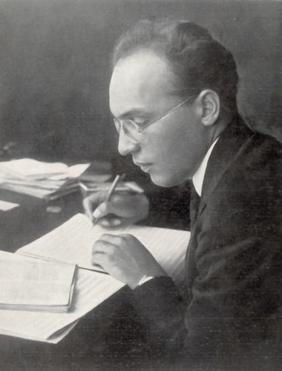
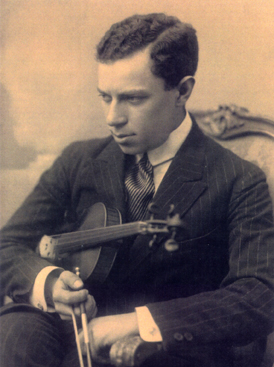
Weill (1900–1950) composed the works in 1924 and 1925, respectively. The concerto received its world premiere in 1925 in Paris during the “Exposition internationale des Arts décoratifs et industriels modernes” (the international arts fair that gave rise to the term art deco); the cantata was first heard in 1927, when Erich Kleiber conducted it at Berlin's Staatsoper. Although piano reductions appeared during the composer's lifetime, he never saw the works published in full score. In 1965 Universal Edition issued a full score of the concerto, but it was not actually engraved, and it lacked editorial commentary.
The Kurt Weill Edition presents the two works fully engraved, with an informative introductory essay and selected facsimiles that illustrate editorial issues. A detailed critical report appears as a separate volume, which also presents a facsimile of the concerto's old published violin part with annotations by Stefan Frenkel, a violin virtuoso and friend of Weill's, who championed the work in the 1920s. This instrumental part was one of several hitherto unknown sources that were unearthed during the years of work on the edition (e.g., the number of double bass players for the concerto was always a point of discussion; now it is clear that the work requires four basses). Performers and scholars alike will want to consult the volume. Universal Edition has created new orchestral materials from these authoritative texts that are immediately available for rental.
Andreas Eichhorn is a full professor of musicology at the University of Cologne, Germany. He is an expert in nineteenth- and early twentieth-century music; recent book publications include monographs on Paul Bekker and Felix Mendelssohn. The next volume to be published as part of the Kurt Weill Edition is Johnny Johnson, a play with music composed in 1936, edited by Tim Carter.
Kurt Weill Edition (Series II, Volume 2): Music with Solo Violin, ed. Andreas Eichhorn (New York: Kurt Weill Foundation for Music / European American Music Corporation, 2010). Main Volume: 246 pp; Critical Report: 71 pp. ISBN: 978-0-913574-68-3. Sales Price: $375 ($250 for subscribers). Order # KWE 2002
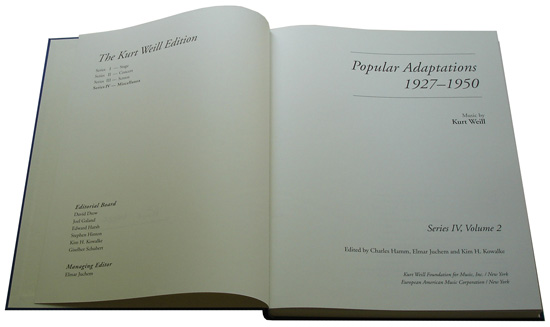
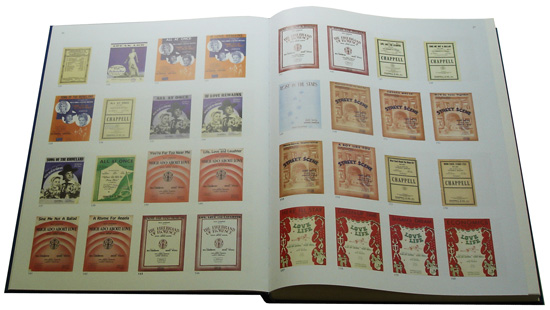
Collectors of sheet music, lovers of popular song, and scholars of pop music and musical theater will be fascinated by the latest volume in the Kurt Weill Edition. Thanks to a sustained, multiyear search, every known popular adaptation of Weill's music published during his lifetime is included in a full-color gallery of covers and its catalogue: workers' choruses, virtuosic violin showpieces, sheet music, vocal gems and selections, polyglot songbooks, newspaper supplements, anthologies, dance band and choral arrangements. Particularly prone to physical deterioration and loss over time, some of these items have apparently survived only as unica. The 176 covers tell a colorful tale all on their own, and each of the 38 black-and-white facsimiles is printed at full size and in original format. A magisterial essay by Charles Hamm, one of the foremost scholars of popular music in the 20th century, accompanies the illustrations and discusses each facsimile in detail. As none of Weill's theatrical works were available in full score, the publication is an essential volume in documenting how Weill's music was transmitted and received during his lifetime.
Kurt Weill Edition (Series IV, vol. 2): "Popular Adaptations, 1927-1950," edited by Charles Hamm, Elmar Juchem and Kim H. Kowalke (New York: Kurt Weill Foundation for Music / European American Music Corporation, 2009), 326 pp. $225 ($175 for subscribers).
Sample pages:
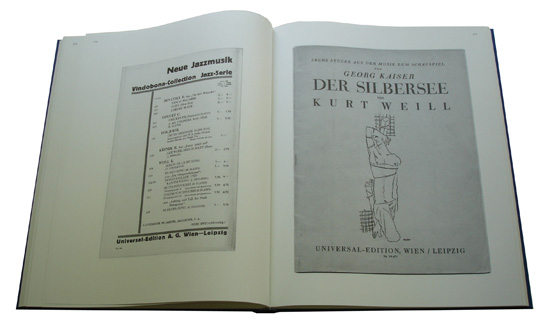
After eighty years of obscurity, Kurt Weill's first stage work is available again. Based on an original set of instrumental parts discovered at Yale University in 2006, the Kurt Weill Edition is releasing a critical edition of Zaubernacht. Weill (1900-1950) composed this children's pantomime in 1922, while he was a member of Ferruccio Busoni's master class in composition in Berlin. Based on a scenario by Wladimir Boritsch (1891-1954), an elusive writer and impresario from Russia, the pantomime received its world premiere on 18 November 1922 at Berlin's Theater am Kurfürstendamm. The work's only other production occurred at New York City's Garrick Theatre in December 1925, after which the orchestration disappeared.
Weill left the orchestral score behind when he fled Nazi Germany in March 1933. Boritsch had taken the instrumental parts to the United States when he prepared the Garrick Theatre's production. After his death in 1954, his widow deposited the parts at Yale University, but the accession process was left incomplete due to a curator's illness and a librarian who deposited the materials in the wrong safe. In the 1960s, the safe, presumed empty, was moved to a basement, where it was soon forgotten. Two years ago, staff members at Yale discovered the safe, but a locksmith had to be called in because the combination was long lost. When opened, the safe revealed its sensational contents.
Zaubernacht is an hour-long stage work scored for an imaginative nine-piece ensemble consisting of flute, bassoon, percussion, piano and five string players. The plot involves two children falling asleep in their bedroom. At midnight a Toy Fairy appears and awakens all the toys with her song, and the action unfolds from there, as the toys interact with the dreaming children in a series of follies and dances.
Edited by Elmar Juchem, Managing Editor of the Kurt Weill Edition, and Andrew Kuster, a staff member of the Kurt Weill Foundation, the publication of Zaubernacht closes a major gap in Weill's oeuvre that ultimately comprised more than thirty stage works, including operas, operettas and musical comedies. Juchem's introductory essay offers a host of new insights into this poorly documented phase of Weill's early career. Weill's only other genuine dance piece is the ballet-chanté The Seven Deadly Sins (1933). The next volumes in the Kurt Weill Edition, currently in production, are: Popular Adaptations, 1927-1950, edited by Charles Hamm; and Music with Solo Violin (Concerto for Violin and Wind Orchestra, op. 12, and Der neue Orpheus, op. 16), edited by Andreas Eichhorn.
Kurt Weill. Zaubernacht. Edited by Elmar Juchem and Andrew Kuster (New York: Kurt Weill Foundation for Music; European American Music Corporation, 2008). Full score volume and critical report volume. ISBN 978-0-913574-65-2
The Kurt Weill Foundation for Music and European American Music Corporation are pleased to announce the publication of Kurt Weill's first opera, the one-acter Der Protagonist (1925) with a libretto by Georg Kaiser. Edited by Dr. Gunther Diehl of Wiesbaden, Germany, and Jürgen Selk (former Managing Editor of the Kurt Weill Edition), the volume publishes Weill's orchestral score for the first time.
Completed in Berlin in March 1925 and given its premiere at the Dresden Staatsoper on 27 March 1926, Der Protagonist occupies a special place in Weill's oeuvre. It was his first opera, written at age twenty-five, and belongs to a series of early compositions that systematically explored almost every musical genre: chamber music, choral music, lieder, orchestral works, and ballet. The opera is the climax of Weill's early development and no other work is so characteristic of his early style.
With the successful premiere of the opera on 27 March 1926, conducted by the eminent Fritz Busch, Weill not only achieved a spectacular breakthrough as a composer but also immediately rose to prominence among the young composers identified at the time with the renewal of the "crisis-ridden genre" of opera.
Der Protagonist marks Weill's first significant collaboration with another artist. Georg Kaiser (1878-1945) was an outstanding representative of expressionist drama. Along with Gerhart Hauptmann he was the most performed German playwright during the Weimar Republic, with some forty premieres of his plays.
The next volumes in the Kurt Weill Edition, currently in production, are: Music with Solo Violin (Concerto for Violin and Wind Orchestra, op. 12, and Der neue Orpheus, op. 16), edited by Andreas Eichhorn; Popular Adaptations, 1927-1950 (edited by Charles Hamm); and Zaubernacht (edited by Elmar Juchem and Andrew Kuster).
The Kurt Weill Foundation for Music and European American Music Corporation are pleased to announce the publication of Kurt Weill's complete Chamber Music. Edited by Dr. Wolfgang Rathert (Professor of musicology at Ludwig-Maximilians-Universität, Munich) and Jürgen Selk (Managing Editor, Kurt Weill Edition), the new publication makes available musical works by Kurt Weill which, while comprising only a small portion of Weill's oeuvre, played a considerable role in his formative years (1919-24). The new edition includes two string quartets as well as two separate movements for string quartet, a sonata for violoncello and piano, the song cycle Frauentanz, and the vocal-instrumental miniature Ick sitze da--un esse Klops.
The relative obscurity of Weill's chamber music can be partially explained by the overshadowing success of his first stage works, beginning with the acclaimed one-act opera Der Protagonist. However, the compositional quality and musical significance of these works of "absolute music" have also been obscured by their uneven publication and performance history, which partly explains their absence from the mainstream of the concert repertoire. This is regrettable, as some of these pieces are of considerable ingenuity and aesthetic appeal and may rank among the outstanding German musical works of this period.
The new edition of Weill's Chamber Music makes this body of work available now in one volume. Several of the Chamber Music works included in the new edition have never before been available in print. Published with an accompanying critical report volume, Chamber Music constitutes the fourth volume in the Kurt Weill Edition, a collected critical edition of his completed works. The next volume in the Kurt Weill Edition, currently in production, is the critical edition of Weill's one-act opera Der Protagonist, scheduled for publication in 2005.
The Kurt Weill Foundation for Music and European American Music Corporation are pleased to announce the publication of the first critical edition of a Broadway musical, Kurt Weill's and Ira Gershwin's The Firebrand of Florence. Edited by the music theorist and Broadway scholar Joel Galand, the new publication finally makes available for the first time the complete score and libretto of one of Weill's most expansive musical offerings. Published in two volumes with an accompanying critical report volume, The Firebrand of Florence constitutes the third publication in the Kurt Weill Edition, a collected critical edition of his completed works.
After the original Broadway run in 1945 in a lavish spectacle produced by Max Gordon, The Firebrand of Florence disappeared into undeserved obscurity, despite the fact that the work boasted a score by Weill, lyrics by Gershwin, and a book by Edwin Justus Mayer, esteemed playwright and screenwriter for numerous films, including To Be or Not To Be. In the mid-1990s, highlights from Firebrand based on original source material were included in two recorded compilations of Weill's Broadway music. But not until three recent presentations--1999 staged production at Ohio Light Opera and two concert versions in 2000 by the BBC Symphony Orchestra in London and by the Radio Symphony Orchestra Vienna--have contemporary audiences been able to experience this work in its entirety. These performances, which were based on a preliminary version of the now completed critical edition, played to critical acclaim and suggest a future for Firebrand beyond that of a curiosity for Broadway specialists.
After The Firebrand of Florence closed, Weill moved on to other projects and left no further indication as to the form in which Firebrand might be transmitted for future use. Therefore, the editor was called upon to evaluate various sources illustrating the work's collaborative evolution between its tryouts in Boston in 1945 and its subsequent staging on Broadway. Significant alterations in the form of cuts, reorchestrations, or reordering of musical sections, complicated the determination of which musical numbers should be included in the edition, and how. However, the critical report which accompanies the full score provides a comprehensive discussion of the existing sources, describes alternatives, and on the basis of the source evidence explains the editorial decision making process in concise prose.
[A recording of the work made from the BBC Symphony performance under the direction of Sir Andrew Davis appeared in 2003 on the Capriccio label.]
The Kurt Weill Foundation for Music and European American Music Corporation are pleased to announce the publication of the new critical edition of Die Dreigroschenoper (The Threepenny Opera) as part of their collected edition series, the Kurt Weill Edition (KWE). The new edition is co-edited by Stephen Hinton, one of the pre-eminent Weill scholars active in the world today, and Edward Harsh, the Managing Editor of the KWE project.
Ever since its first production took Berlin by storm in 1928, Die Dreigroschenoper has been widely seen as one of the most important music-theatrical works of the twentieth-century as well as an icon of Weimar culture. Still, through seventy-two years and literally thousands of productions, the work had never been available in an authoritative edition. The new edition reconciles the many confusions of detail in the three key sources that emerged from that famed original 1928 production: Weill's manuscript, the published libretto, and the published piano-vocal score. But the editors went far beyond those three items to consult several dozen other documents, from the original, hand-written instrumental parts to Weill's correspondence with his publisher Universal Edition, to contemporaneous press reviews and recordings.
The result is a corrected, self-consistent version true to the historical state of the work that first so electrified its audiences. The edition presents not just the musical text but the complete dialogue and stage instructions in their proper sequence as well. Included are many features never before published. For instance, the original production included six pieces of instrumental stage music based upon a few of the work's most popular songs. The editors were able to reconstruct five of these from the instrumental parts and have included them in a special appendix. Another appendix offers additional strophes that could be used by performers as alternatives or supplements to four of the songs in the main text.
The new edition was used for the first time on the recently-released BMG recording by the Ensemble Modern and HK Gruber, a recording that has earned critical raves:
This new two-disc set of Kurt Weill's The Threepenny Opera, featuring composer and chansonnier HK Gruber with the excellent Ensemble Modern of Frankfurt, wrenches you mercilessly our of your comfy chair into the grubby world of 1920s Weimar Republic theatre--The content of Weill's and Brecht's low-life adaptation of The Beggar's Opera was never set in tablets of stone. Even at its first performance in 1928, circumstances dictated ad hoc additions omissions right up to the last minute. Based on the new Kurt Weill Edition, prepared by Stephen Hinton and Edward Harsh, this recording incorporates the fruits of their research, including instrumental entr-actes and scene-setting summaries devised by Brecht for a 1930s concert version.
--The Daily Telegraph (London)
Das Ensemble Modern garantiert messerscharfe Präzision und sanften Swing, schräge Verrücktheiten und subversive Phantasie ohne Ende. HK Gruber dirigiert mit Besessenheit am Detail und Liebe zum Stück. Die Aufnahme ist nicht nur Ohrenbalsam und interpretatorischer Glücksfall, der den Übergang Weills ins nächste Jahrtausend vorzeichnet, sondern auch eine editorische Pioniertat. Zugrunde liegt nämlich zum ersten Mal die kritische Neuausgabe der Kurt Weill Foundation.
--Opernwelt